


**This post contains affiliate links for products that I truly love and believe in. Clicking on these link may result in me gaining financial rewards which enable me to continue running Sustainable Deeds**
This year an estimated 56,000 runners are taking part in the London Marathon. Not only is this excellent for people’s health and fitness, its also a key way for charities to raise vital funds. But there are hidden costs too, one of those is the vast amount of microplastic fibres that are released when each of those 56,000 participants washes their synthetic running outfits.
Why is synthetic running gear an issue?
The majority of sports wear you will find on the high street is made from synthetic fibres such as polyester, nylon and elastane. There’s a good reason for these fabric choices, they are high performance, lightweight and breathable. These factors are very beneficial for the sportsperson, but pretty disastrous for the environment and animals, especially for marine species.
Every time we wash our clothes in a washing machine, our clothes shed hundreds of microfibres into the water system. This is problematic in itself, but even more so when those microfibres are also microplastics. Nearly half of UK adults say they wash their sportswear after every use, so the issue of microplastic release through washing is vast!
When microfibres enter marine environments they break down even further and they accumulate toxins. This makes them disastrous to the lives of the fish and sea creatures that mistakenly eat them thinking they are food. It doesn’t stop there, for those of you who eat seafood, those microplastic fibres end up in your seafood supper and then in you!
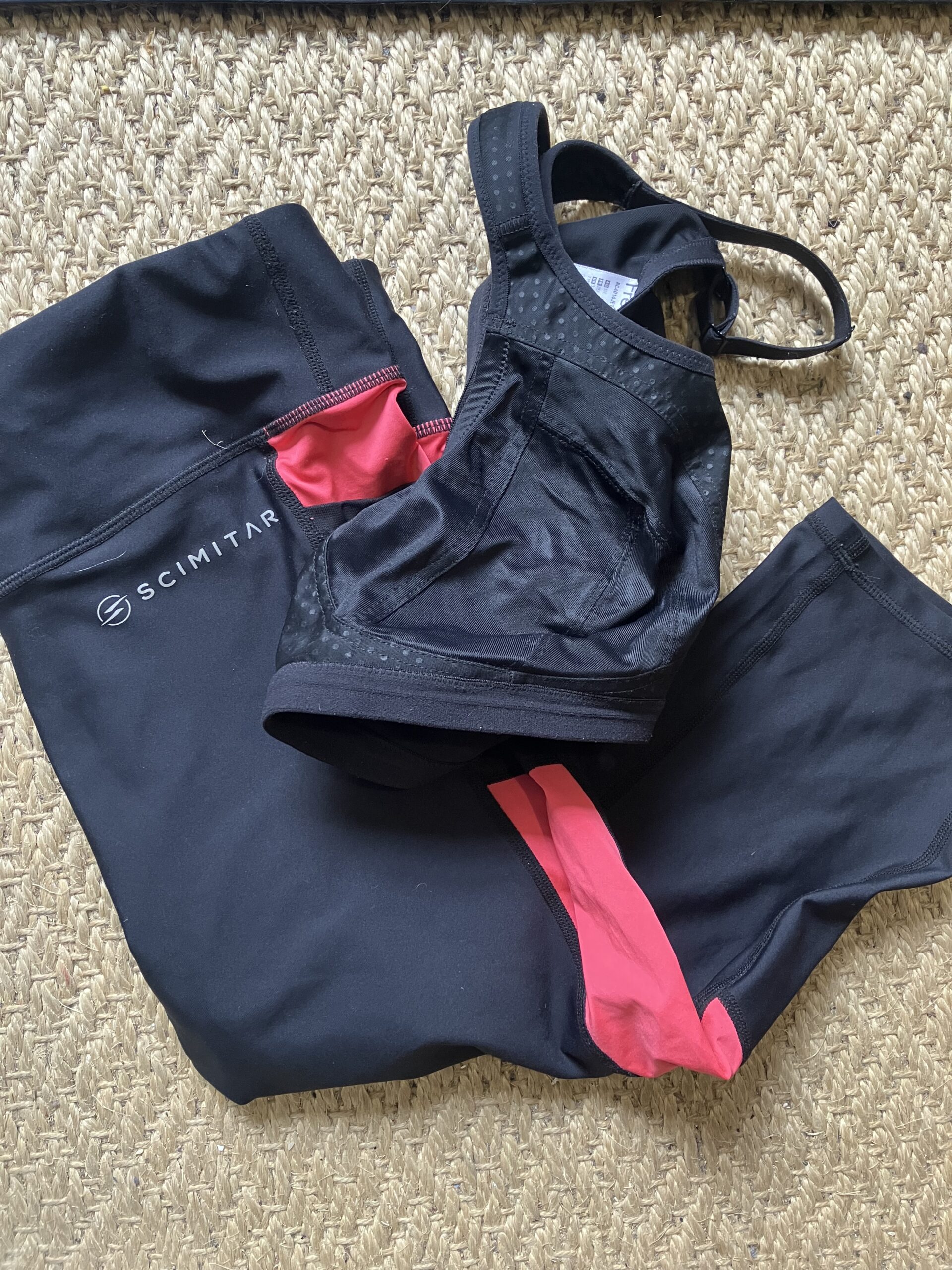
I’ve recently started Couch to 5k (Yes, its my fourth attempt but hey we wont mention that!) As someone who tries to only buy clothing made from natural fibres, I am really conscious of the fact that I still wear leggings and a sports bra made from synthetic fibres when I run. But I have found a handy solution to stop microplastic fibres from my running gear entering the water system. Let me introduce you to my GUPPYFRIEND Washing bag!
GUPPYFRIEND – WASHING BAG
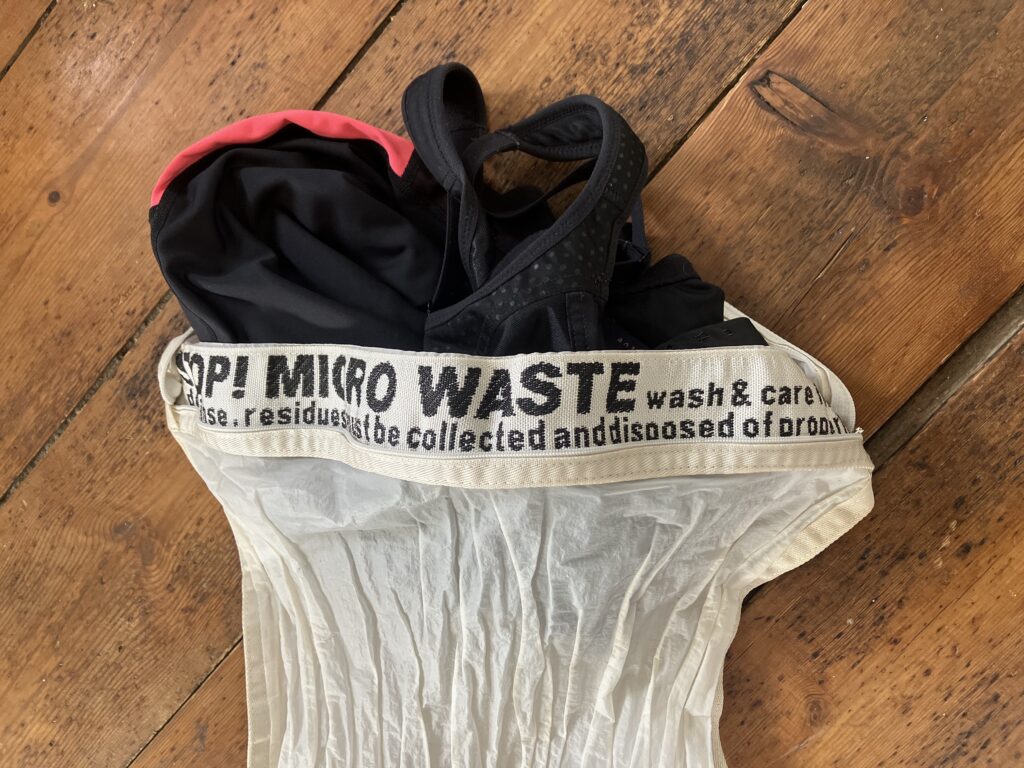
Guppyfriend is a cleverly designed solution to the issue of microplastic fibres being released through machine washing. It’s a highly technical fabric washing bag (that doesn’t shed fibres itself) that captures microfibres during a wash cycle so that you can dispose of them responsibly. It is so simple to use, it literally does the hard work for you!
My GUPPYFRIEND is around ten years old so it looks slightly different to the one’s available here, but it does exactly the same job. Here’s how to use one:
- SORT YOUR WASHING PILE – Find the items made from synthetic fibres (polyester, nylon, elastane etc)
- PLACE SYNTHETIC CLOTHING INTO YOUR GUPPYFRIEND WASHING BAG – Make sure not too over fill it!
- POP THE WHOLE BAG INTO YOUR WASHING MACHINE DRUM WITH YOUR OTHER WASHING
- WASH ON AN ECO CYCLE – Or the most environmentally friendly setting on your washing machine
- FIND THE MICROFIBRE WASTE- When your wash is done, carefully remove the items from your GUPPYFRIEND and then look for the tiny clumps of microfibres in the bottom and in the hem of your washing bag.
- PUT THE MICROFIBRES IN YOUR BIN- Gather the microfibres together and place them in your general waste.
- RELAX WITH A CUP OF SOMETHING NICE!- Enjoy the feeling that you have just done something really important for the environment
Honestly this could not be easier to do, and I also find it really fascinating to see the amount of microfibres that would have been released. It really does give you a little wake up call and a reminder to stop buying synthetic clothing where you can.
I highly recommend you get yourself a GUPPYFRIEND today, it really will make a difference with very little effort- win win!